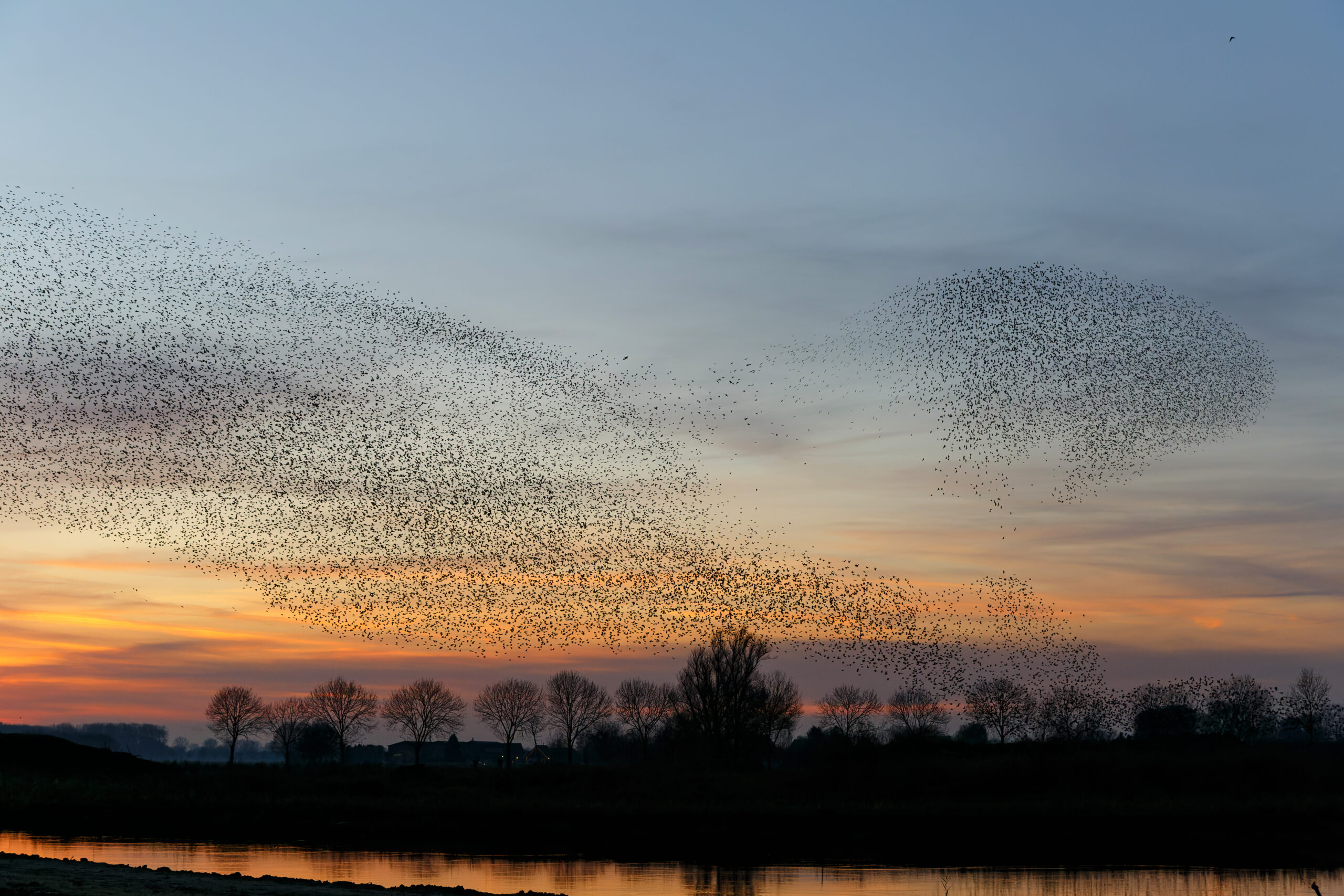


Have you ever watched a huge flock of birds moving through the sky?
Thousands of them moving together.
They twist.
They bend.
They turn all at once.
No leader.
No loudspeaker.
Just thousands of tiny decisions happening at the same time.
When enough birds feel something is off, the whole flock changes direction. Something like that might be starting to happen with us.
For a long time, people didn’t think much about plastics, chemicals, or toxins.
But now something interesting is happening.
People who used to mostly talk about trucks, football, and cold beer are starting to talk about microplastics.
They’re asking questions about forever chemicals.
They’re wondering why toxins keep showing up in our water, food, and even our bodies. The birds — people in this case — might not all agree yet.
But they are starting to slow down and look around.
And sometimes that’s how a direction change begins.
The Simple Truth About Carbon
The whole story really comes down to three kinds of carbon.
Living Carbon
Living carbon is part of nature’s cycle.
It’s found in things like: plants, trees, crops, wood, cotton, paper, natural fibers
These materials mostly come from the carbohydrate world of plants.
But animals — including us — are also part of the living carbon cycle.
Our bodies are built more from proteins and fats, but they still come from the same living system that starts with plants and sunlight.
When living things die, tiny microbes in the soil break them down and turn them into: soil, nutrients, plant food, water
Living carbon returns to life.
Nature has been recycling it for billions of years.
Ancient Carbon
Long ago, huge amounts of plant life were buried underground.
Leaves, trees, and ancient plant matter were slowly covered by sediment.
Over millions of years, heat and pressure squeezed and transformed that buried plant material.
Cut off from oxygen, water, and the living world, it slowly turned into:
• oil
• coal
• natural gas
A barrel of oil is, in a very real sense, ancient sunlight stored in plants from a world millions of years ago.
That carbon has been locked away from the living system for a very long time. When we dig it up and use it, we release that ancient carbon back into today’s world. Synthetic Carbon (Plastic)
Humans discovered that ancient carbon was easy to control.
We could melt it, shape it, and turn it into almost anything.
So we started making:
• plastic bottles
• food wrappers
• packaging
• synthetic fabrics
• countless everyday products
Plastic seemed perfect.
It was cheap.
It was strong.
And it lasted a very long time.
But that turned out to be the problem.
Nature never evolved a way to digest it. To be clear, nature implies an intimate relationship with water. Ancient carbon is comparatively, a zombie.
The Microplastic Problem
When nature encounters something it cannot metabolize, it has only one option. It slowly breaks it into smaller and smaller pieces.
Plastic doesn’t disappear, it erodes and fragments.
First into small pieces.
Then into microplastics.
Then into particles so tiny we can barely measure them.
These particles are now showing up in: rivers, oceans, soil, drinking water, food, the air, and even inside our bodies.
Nature isn’t recycling plastic.
It’s simply reducing it into smaller and smaller pieces and find new places to accumulate.
Why Recycling Isn’t the Real Answer
Many people believe recycling will solve the plastic crisis.
But imagine standing in a stadium and firing millions of pieces of confetti into the crowd of thousands.
Some of it might get picked or swept up.
But most of it spreads everywhere.
Now imagine trying to collect every single piece after it has blown across cities, rivers, fields, and oceans.
That’s the challenge with single-use plastic.
We are constantly spraying tiny pieces of material across the planet, then hoping we can gather them all back again.
A perfectly recyclable item that never reaches the recycling center doesn’t solve the problem. But a material that nature can digest helps the earth no matter where it ends up.
Nature’s Tiny Engineers
The best materials engineers on Earth don’t wear lab coats.
They live in the soil.
They are microbes only 1–3 micrometers tall.
These tiny organisms know how to break down almost everything that comes from nature. They turn:
• fallen leaves into soil
• dead trees into nutrients
• plant matter into fertile land
Nature already built the perfect recycling system.
We just have to design materials that work with it.
The Direction Change
This doesn’t mean the modern world disappears.
It simply means we start designing more things from materials that nature already understands. Materials made from: plants, natural fibers, biological polymers, earth-digestible materials
Instead of forcing nature to adapt to our chemistry…
we can start designing chemistry that fits inside nature’s cycle.
The Murmuration Moment
Social change rarely happens all at once.
It happens the way birds change direction.
First a few notice something.
Then a few more.
Then suddenly the whole flock moves.
Right now, more and more people are noticing: toxins, microplastics, chemicals that don’t belong in nature
The birds aren’t all turning yet.
But they are beginning to look in a different direction.
The Real Choice
The question is simple:
Do we keep filling the world with materials nature cannot digest?
Or do we start building things nature already knows how to recycle?
Because nature has been doing chemistry for billions of years. And it’s very good at it.