


What Truth Actually Is
In my last essay, I proposed that wisdom grows sideways.
Not upward.
Not through certainty.
Not through accumulating answers.
But through branching.
Through curiosity.
Through the willingness to remain open long enough for new perspectives to emerge.
But that leaves an obvious question.
What are the branches reaching toward?
What is it that wisdom is actually seeking?
What is truth?
Most people assume truth is an answer.
A fact.
A conclusion.
A destination.
Something to be possessed.
Something to be known.
Something to be right about.
I am no longer convinced.
The more I have explored this question, the less truth resembles an answer and the more it resembles a direction.
A kind of light.
Something living things naturally orient toward when they are healthy enough to do so.
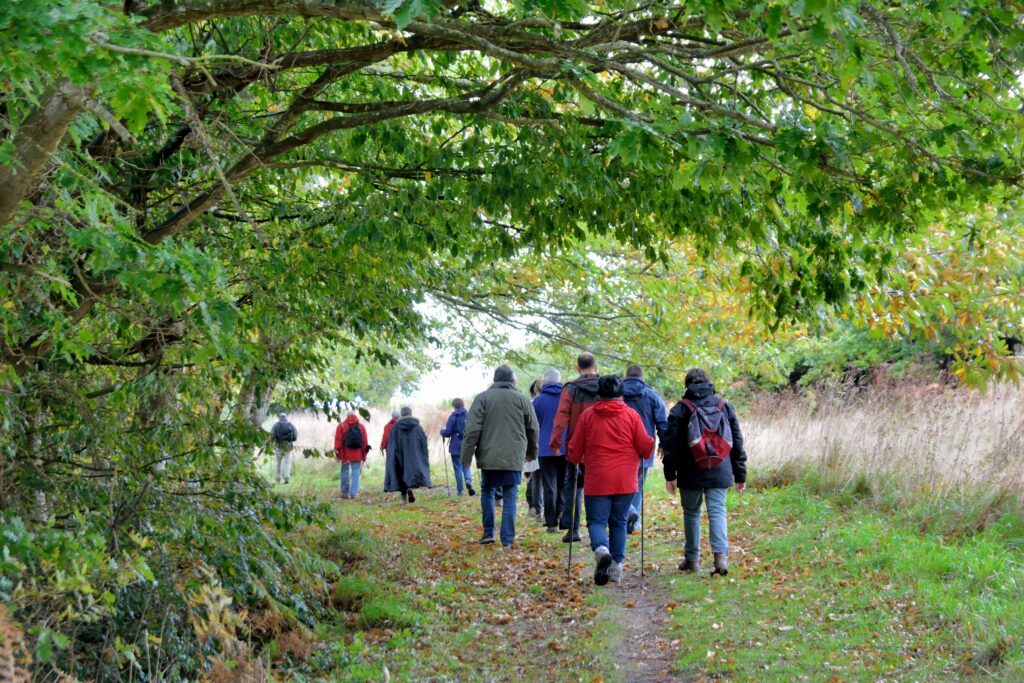
A tree does not understand sunlight.
It does not debate sunlight.
It does not form opinions about sunlight.
It simply grows toward it.
Life seems to know something before thought arrives.
Perhaps we do too.
One reason truth is so difficult to define is because we often confuse it with facts.
Facts matter.
Facts are real.
But facts alone do not seem sufficient.
A person can know countless facts and remain profoundly disconnected from themselves.
Disconnected from others.
Disconnected from life.
Truth appears to be something more.
Something deeper.
Something that survives expansion.
The closer I look, the more truth seems to possess a strange characteristic.
It keeps showing up.
In different places.
In different forms.
Under different names.
Yet somehow it remains recognizable.
Trust strengthens a friendship.
Trust strengthens a marriage.
Trust strengthens a team.
Trust strengthens a community.
Trust strengthens a civilization.
The same appears true of belonging.
Participation.
Reciprocity.
Cooperation.
The forms are different.
The lesson is the same.
Perhaps this is one way of recognizing truth.
Not because it can be proven once.
But because it keeps revealing itself.
Again and again.
Across different domains of life.
Different people.
Different cultures.
Different generations.
Different scales of organization.
The same patterns continue to emerge.
Life appears to organize itself around them.
And when those patterns are ignored, fragmentation often follows.
This is why love feels different.
Why trust feels different.
Why belonging feels different.
Why participation feels different.
They are not merely ideas.
They are recurring features of coherence itself.
The more deeply we examine life, the more often we encounter them.
As though reality keeps trying to teach the same lesson through different teachers.
But if truth is so natural, why do people resist it?
Why do we defend old beliefs?
Why do we avoid uncomfortable realizations?
Why do we spend so much energy protecting certainty?
The answer may have very little to do with intelligence.
I suspect it has far more to do with belonging.
We do not fear truth because it is painful.
We fear truth because we are uncertain we will remain loved after it arrives.
A new truth may threaten a marriage.
A friendship.
A career.
A religious identity.
A political identity.
A family system.
From the nervous system’s perspective, these are not abstract concerns.
They are survival concerns.
The nervous system is not primarily asking:
“What is true?”
It is asking:
“Will I still belong?”
For most of human history, belonging was survival.
To lose the tribe often meant death.
The biology has not forgotten.
This is why truth and love seem so deeply connected.
Truth asks:
What is real?
Love asks:
Can I remain connected to what is real?
Truth reveals.
Love integrates.
Truth illuminates.
Love reconciles.
Truth helps us see.
Love helps us stay.
Without truth, love can become attachment.
Without love, truth can become brutality.
Coherence requires both.
Perhaps this is why the heart matters so much.
Not merely as a symbol of emotion.
But as a threshold.
A transition from conditional belonging to authentic participation.
Before that threshold, coherence tends to be episodic.
A glimpse.
A breakthrough.
A moment.
A fleeting experience of clarity.
Then the system returns to seeking safety.
Protecting identity.
Managing approval.
Defending certainty.
The lower centers are still carrying the burden.
But once the heart field stabilizes, something changes.
The organizing principle changes.
Life is no longer driven primarily by the question:
“How do I remain accepted?”
It becomes increasingly guided by another:
“How do I remain coherent?”
Truth and belonging stop competing with one another.
For the first time, they begin working together.
Perhaps this is what wisdom has been trying to teach us all along.
Truth is not an object.
Not a doctrine.
Not a possession.
Not a conclusion we defend.
Truth is something we participate in.
Something we align with.
Something we grow toward.
Like a tree reaching toward light.
Not because it fully understands the light.
But because life within it recognizes something nourishing there.
Something real.
Something worth growing toward.
And perhaps wisdom is nothing more than this:
The willingness to keep reaching.
Even when certainty would prefer that we stop.
Even when belonging feels uncertain.
Even when the next branch requires leaving an old one behind.
The tree does not grow because it understands the sunlight.
It grows because it remains open to it.
Perhaps truth works the same way.