

I was sitting at a stoplight when something unexpectedly caught my attention.
In the distance, I could see the staircase leading up to one of the giant water slides at our local amusement park. Halfway up, a little girl stood waiting her turn.
She wasn’t impatient.
She wasn’t staring at the people ahead of her.
She wasn’t wondering how much longer the line would take.
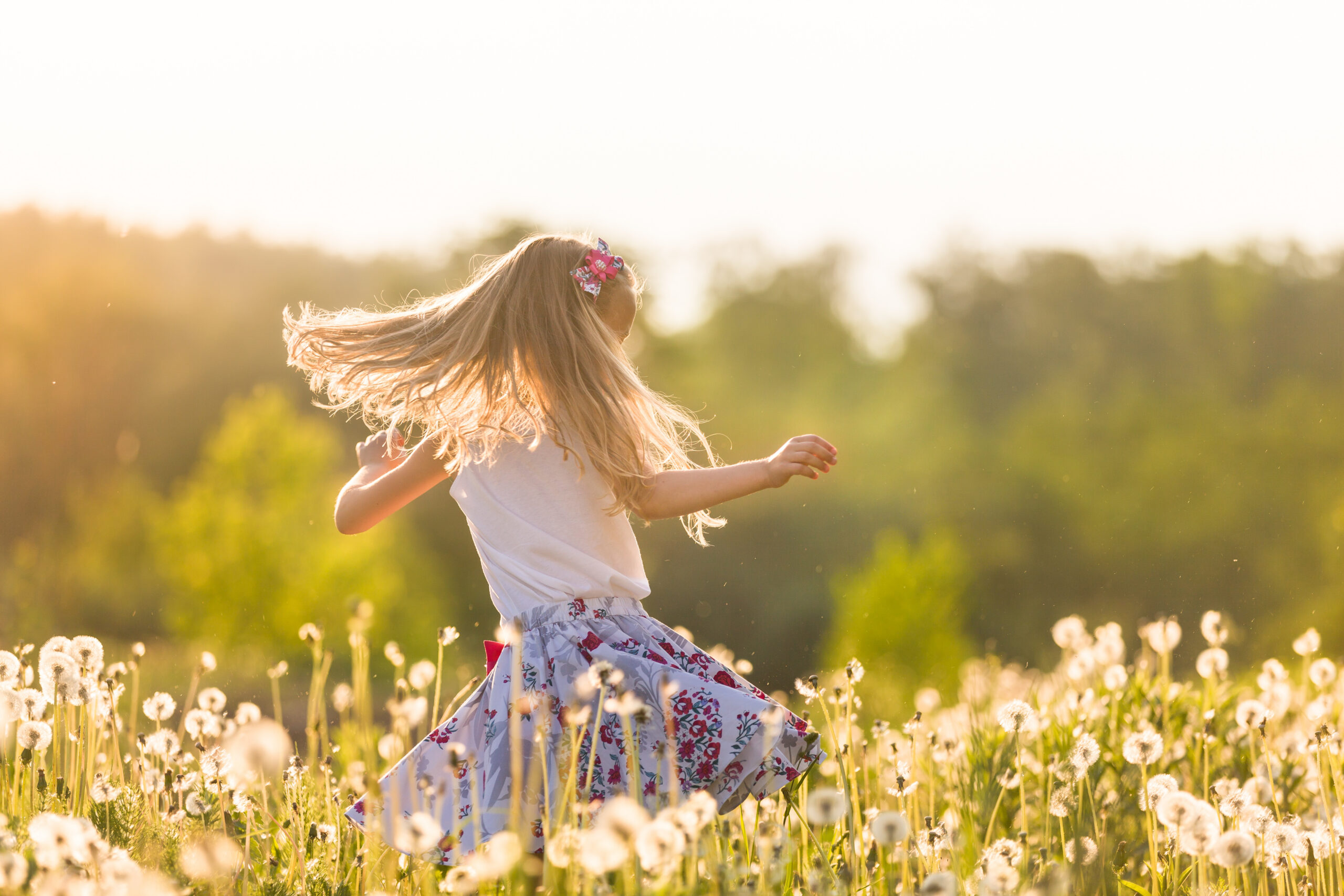
She was dancing.
Not performing.
Not because anyone was watching.
Just dancing with whatever little bit of space she had while she waited for the chance to launch herself down the slide.
She looked completely alive.
As I watched her, a phrase I’ve heard countless times drifted into my mind.
“Man… I sure wish I had their energy.”
If you have children—or have ever spent much time around them—you’ve probably heard someone say exactly that.
We speak as though children possess some magical reserve of energy that slowly disappears with age.
But sitting there at that stoplight, I found myself wondering if we’ve been asking the wrong question.
Maybe the real question isn’t why children have so much energy.
Maybe it’s…
Where does ours go?
As adults, we often think of energy as something we either have or don’t have.
We blame our age.
Our schedule.
Our lack of sleep.
Our responsibilities.
And while those things certainly matter, I can’t help but wonder if something deeper is happening.
Children seem to spend very little energy resisting life.
They laugh without embarrassment.
They cry without apology.
They become fascinated by ordinary things.
They ask endless questions.
They move because movement feels good.
When they’re excited, they dance.
When they’re sad, they cry.
When they’re curious, they explore.
Energy moves through them.
Adults, on the other hand, become remarkably skilled at holding.
Holding our emotions.
Holding our image.
Holding our fears.
Holding yesterday’s conversations.
Holding tomorrow’s worries.
Holding expectations.
Holding identities we’ve worked hard to construct and are now afraid to lose.
Much of adulthood isn’t spent living.
It’s spent maintaining.
Maintaining the version of ourselves we believe the world expects to see.
And I wonder how much energy that maintenance requires.
Perhaps energy doesn’t disappear as we age.
Perhaps more and more of it becomes occupied.
Bound.
Compressed beneath layers of tension, certainty, responsibility, unprocessed experiences, and the quiet weight of trying to keep everything together.
If that’s true, then maybe the question isn’t,
“How do I get more energy?”
Maybe it’s,
“What is consuming the energy I already have?”
That question feels different.
Because now we’re not looking for another cup of coffee.
We’re looking at the conditions of our lives.
The relationships we carry.
The stories we replay.
The identities we defend.
The emotions we never allowed ourselves to complete.
The moments when we stopped playing because everything became productive.
The moments when curiosity gave way to certainty.
The moments when we learned that looking composed was more important than feeling alive.
Perhaps energy isn’t simply something we generate.
Perhaps it’s something that flows when the conditions allow it.
Maybe this is why children often seem so vibrant.
Not because they have discovered the secret to creating more energy…
…but because they haven’t yet learned all the ways adults unknowingly trap it.
That little girl at the water park wasn’t trying to increase her energy.
She wasn’t optimizing it.
She wasn’t protecting it.
She was simply allowing it to move.
There’s something profoundly instructive about that.
Not because we should all behave like children.
But because children remind us of something we may have forgotten.
Life doesn’t begin by producing energy.
It begins by not resisting it.
The next time you hear someone smile and say,
“I wish I had their energy,”
pause for just a moment.
Maybe the better question isn’t where their energy comes from.
Maybe it’s where ours goes.
And maybe, just maybe, the path back isn’t about finding more energy.
It’s about freeing the energy that has been waiting inside us all along.