

The Bloodletting of Trust
There’s a word for moments that feel like they were arranged before you arrived.
Not planned.
Not forced.
But placed.
It’s called synchronicity—a term first introduced by Carl Jung to describe meaningful coincidences that don’t follow cause and effect, but still feel connected.
Not random.
Aligned.
It’s what we call it when something outside of us lines up too precisely with something happening within us to ignore.
When the timing is too exact.
The signal too clear.
The feeling too familiar.
Not because we made it happen.
But because something in us was ready to recognize it.
I believe I experienced that recently.
I was chaperoning my son’s first-grade field trip.
A preserved site from the early 1800s—a place meant to show how a family lived when fifteen children under one roof wasn’t unusual.
We walked the grounds:
The house—where they slept.
The kitchen—separate, to protect the home from fire.
The gardens.
The ice house.
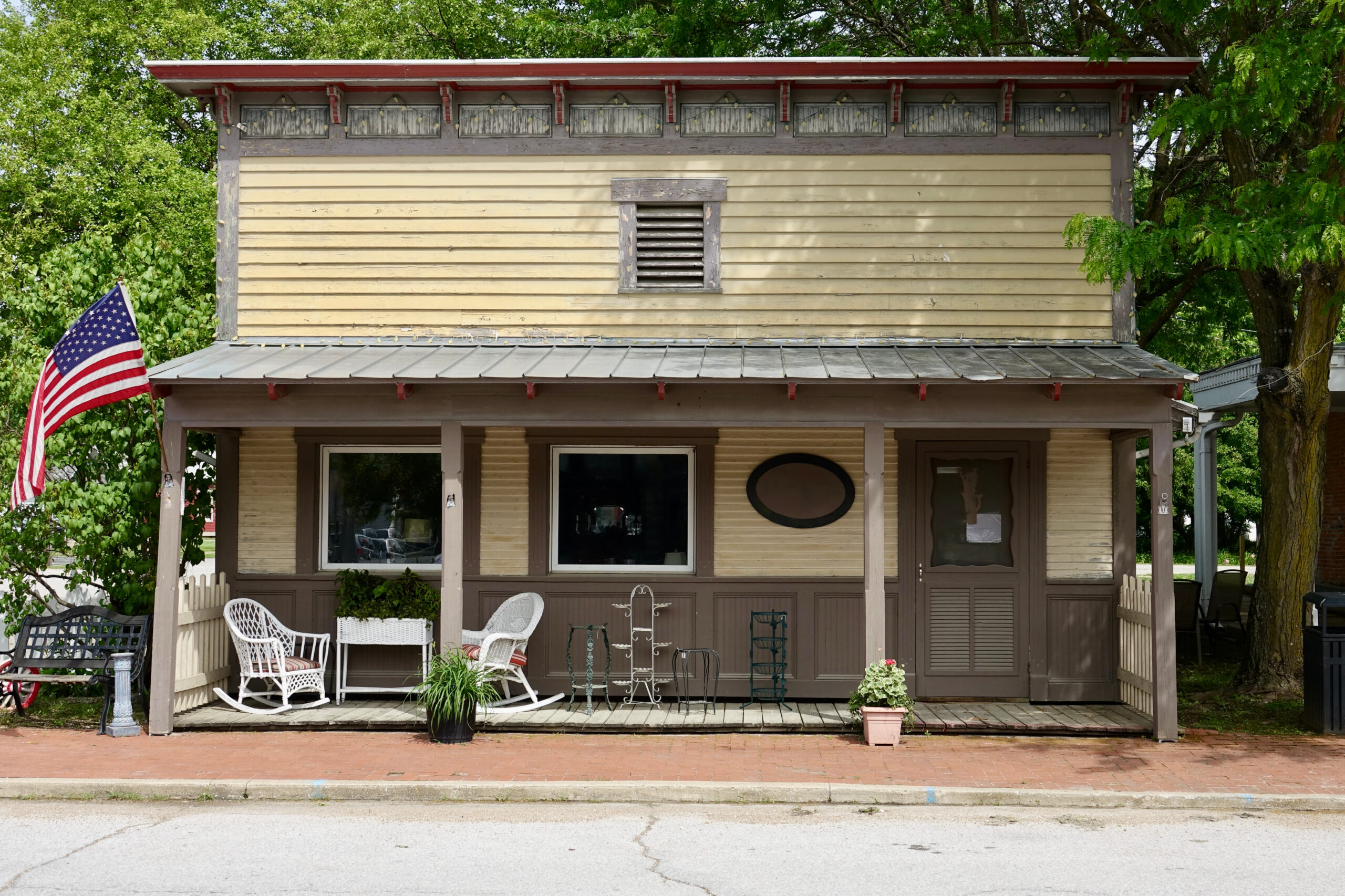
And the general store.
Our group started there.
I don’t think that being in the group that started its tour there was a coincidence.
Inside, the floorboards told their own story—worn wood, uneven in places, carrying the imprint of thousands of steps.
Not rushed steps.
Lived ones.
Nothing was in excess.
Tools hung on the walls—not rows and rows, but one… maybe two of each.
A rake.
A hammer.
A few weaving tools.
Just enough.
Where a modern store stretches into aisles and categories, this space held everything in small, deliberate sections.
Not enough fine china for everyone.
Not enough of anything for everyone.
And somehow… that wasn’t a problem.
Things moved differently.
Not fast.
But they moved.
The way nature moves.
No urgency.
No backlog.
No panic.
Just a quiet knowing that what needed to happen would.
But this wasn’t just a place to buy things.
It was a place to participate.
If you needed a shovel, you didn’t just pay for it.
You might bring root vegetables from your garden.
Trade part of what you had.
And the rest?
It didn’t need to be settled right then.
There was no system behind it.
No verification.
No approvals.
Just a ledger.
Paper. Ink.
And two people.
They shook hands.
And that was enough.
The ledger wasn’t a record of transactions.
It was a reflection of relationship.
An honest agreement between the shopkeeper and someone he already knew.
Someone he had seen.
This is what we mean when we talk about a world where participation is visible.
Where honesty isn’t declared—it’s observed.
People didn’t behave that way because they were being told to.
They behaved that way because the system made anything else… expensive.
Not financially.
Relationally.
If you took more than you gave, people noticed.
If you didn’t follow through, it showed up.
If you tried to game the ledger, it didn’t take long before the door quietly closed.
Not through punishment.
Through absence.
You didn’t get cut off from a system.
You got cut off from people.
And that was enough.
So most people didn’t steal.
Didn’t overreach.
Didn’t take what wasn’t theirs.
Not because they were trying to be good.
Because it didn’t make sense to do otherwise.
There’s language for this now.
In yoga, they’re called the yamas and niyamas—often interpreted as rules for how to live.
But long before they were written down, they were simply observed.
The same way other traditions arrived at their own versions—like the Ten Commandments.
Not as instructions imposed on people, but as reflections of what holds when human systems stay close enough to remain relational.
Standing there, it didn’t feel like morality.
It felt like physics.
When a system is visible enough, coherent enough—certain behaviors don’t need to be enforced.
They either make sense… or they don’t.
When everything is visible, incoherence becomes inefficient.
Or maybe more precisely—in a system where everything is seen, incoherence can’t hide long enough to scale.
When coherence is present, you don’t have to tell people how to behave.
The system does that on its own.
We don’t operate that way today.
Transactions don’t feel like that anymore.
And standing there, watching a group of kids move through that space—I had the distinct feeling
that I wasn’t just looking at the past.
I was being shown something.
The First Cut of Trust
You don’t notice it when it happens.
There’s no sound.
No signal.
No moment you can point to and say—that’s when it changed.
Because nothing obvious breaks.
People don’t suddenly decide to trust each other less.
There’s no meeting.
No shift in values.
No announcement that something fundamental is about to be lost.
And yet—something is or rather was.
What changed… was visibility.
At some point, you no longer needed to know who made what you used.
You didn’t need to see the hands that grew your food, built your tools, or kept your system moving.
Distance entered quietly.
At first, it looked like progress.
More reach.
More output.
More access.
And it worked.
That’s what made it so hard to question.
But something subtle came with it.
The further things moved from you—the harder they became to see.
And once something can’t be seen… it has to be trusted differently.
Not through experience.
Through assumption.
The ledger didn’t disappear.
It changed form.
It became less about what was known and more about what could be recorded.
Less about relationship and more about agreement.
And slowly—almost imperceptibly—something began to drain out of the system.
Not trust itself.
But the conditions that made it effortless.
Because trust has always depended on something simple:
Being able to see and be seen.
To observe over time.
To witness effort.
To recognize consistency without needing proof.
And once that starts to fade… everything else has to step in to replace it.
The Bleeding Spreads
At first, the replacements made sense.
They had to.
Because something real had already begun to slip.
If you can’t see someone’s effort, you need a way to measure it.
If you can’t feel someone’s reliability, you need a way to verify it.
If you can’t stay connected to the system, you need a way to manage it.
So we built layers.
Records.
Contracts.
Systems of proof.
Not because we stopped trusting.
But because we could no longer afford to trust the way we once did.
And this is where the bleeding deepens.
Because what we replaced wasn’t just trust.
It was the conditions that made trust possible.
There are only a few things that have ever allowed human systems to work without force.
They have to happen at the same time.
Not sequentially.
Not optionally.
Together.
Connection. Movement. Openness.
Connection—so people remain in relationship long enough to matter.
Movement—so effort, energy, and contribution can actually flow.
Openness—so nothing has to collapse before it’s fully seen.
When those three are present, trust doesn’t need to be constructed.
It emerges.
But when even one of them breaks—something else takes its place.
When connection weakens, we feel it as distance… and call it independence.
When movement gets blocked, we feel it as friction… and call it stress.
When openness collapses too fast, we feel it as urgency… and call it clarity.
And once that happens—the system starts to harden.
You can feel it in people.
The body tightens.
The breath shortens.
The mind speeds up.
Nervous systems brace.
Because when you can’t rely on what you see, you start preparing for what you can’t.
And trust—real trust—doesn’t survive in a braced system.
It requires space.
It requires time.
It requires the ability to stay open long enough for something real to form.
That’s what made the general store possible.
Not simplicity.
Not morality.
Capacity.
The capacity to leave things a little unfinished.
A ledger didn’t need to be closed that second.
A trade didn’t need to be perfectly balanced in the moment.
A person didn’t need to be reduced to one transaction.
There was room for things to take shape over time.
Trust depends on that.
It depends on the ability to stay with something long enough for it to become real.
To let effort be seen.
To let patterns emerge.
To let people reveal who they are without forcing it too soon.
Most modern systems don’t have that capacity.
Not because people are worse.
But because the conditions are different.
Too much distance.
Too much speed.
Too little visibility.
And the distance didn’t stop with systems.
It moved into identity.
There was a time when people became who they were in places where they could be seen.
At home.
In school.
In their communities.
Their identity was shaped by people who knew them.
Who watched them grow.
Who could feel the difference between who they were becoming and who they were pretending to be.
Then something changed.
Now identity can form in spaces where no one actually sees you.
Shaped by people you’ve never met.
Measured by signals that don’t carry context.
Reinforced without relationship.
And the same pattern shows up.
Less visibility.
More assumption.
More pressure to define, decide, and perform.
And once again—something real gets replaced.
So we compensate.
We replace connection with networks.
Movement with transactions.
Openness with decisions.
And then we wonder why it feels different.
But control isn’t the same as coherence.
Control doesn’t just reduce uncertainty.
It narrows the field of options and opportunities.
It collapses what’s possible into something that feels manageable.
Not because it’s more true—because it’s easier to live with.
Because when trust has been drained from a system, leaving things open starts to feel risky.
You don’t know if the other person will follow through.
If there will be enough.
If the system will hold.
So you decide early.
You take a position.
You close the loop.
Not because it’s right.
Because it feels safer than waiting.
And over time, that pattern scales.
We move from shared space to guarded space.
From participation to protection.
You can see it everywhere.
Take something simple.
A tool.
A rake on a wall.
In a system where people are seen, you take what you need.
You return it.
You share it.
You trust it will be there when you come back.
In a system where trust has thinned—you take two.
Or three.
Or all of them.
Not because you’re selfish.
Because you’re uncertain.
And uncertainty, without trust, turns into fear.
Fear turns into protection.
Protection turns into hoarding.
And now the system has changed.
Not because the rules changed.
Because the conditions did.
This is how markets begin to behave the same way.
Accumulation replaces participation.
Scarcity replaces reciprocity.
Control replaces relationship.
And once that takes hold—the system begins to reinforce itself.
Because now everyone is responding to the same underlying signal:
“I can’t rely on anyone or anything to take care of me.”
So they act accordingly.
And the more they do—the more true it becomes.
This is the deeper cost of the distance.
Not just that we can’t see each other.
But that we no longer feel safe enough to leave anything open.
So we close early.
We decide quickly.
We take more than we need.
And call it rational.
Even necessary.
But underneath all of that—something hasn’t changed.
The requirement.
Life still depends on connection.
It still depends on movement.
It still depends on openness.
That equation hasn’t gone anywhere.
We’ve just built systems that make it harder to satisfy.
And yet— when those systems fail… when pressure rises… when survival becomes real—something remarkable happens.
We don’t invent a new way forward.
We return to an old one.
Distance collapses.
People reconnect.
Effort becomes visible again.
And trust… starts to rebuild.
Not slowly.
Quickly.
Because it has to.
Because at a certain point—incoherence doesn’t just struggle.
It stops working.
And coherence… doesn’t need to be taught.
It re-emerges.
This is why, when collapse becomes real enough—the animosity fades.
The vitriol softens.
The separation dissolves.
Not out of kindness.
Out of requirement.
Because life… has always depended on coherence.
And it still does.
Closing Thoughts and the Return to the Ledger
The ledger worked for a reason.
Not because it was simple.
Not because people were better.
Because people were seen.
Their effort was visible.
Their patterns were knowable.
Their actions didn’t need to be proven—they could be observed.
The ledger didn’t create trust.
It recorded what was already there.
And when the conditions that made that possible began to fade—we didn’t lose the ledger.
We lost what it depended on.
We can all agree we are not going back to that world.
We won’t return to slower transactions or paper records or a single place where everything passes through.
But that doesn’t mean the principle is gone.
Because the physics underneath it hasn’t changed.
Trust still forms the same way it always has.
Through repeated visibility.
Through shared space.
Through the ability to observe, over time, how something—or someone—actually shows up.
The form will be different.
But the requirement won’t be.
Where systems begin to shorten distance, restore visibility, and allow participation to be seen again—trust will follow.
Not because we decide to trust.
Because the conditions make it possible.
That’s how belonging works.
Not as an idea.
As a function.
And the moment those conditions return—so does everything the ledger once held.