
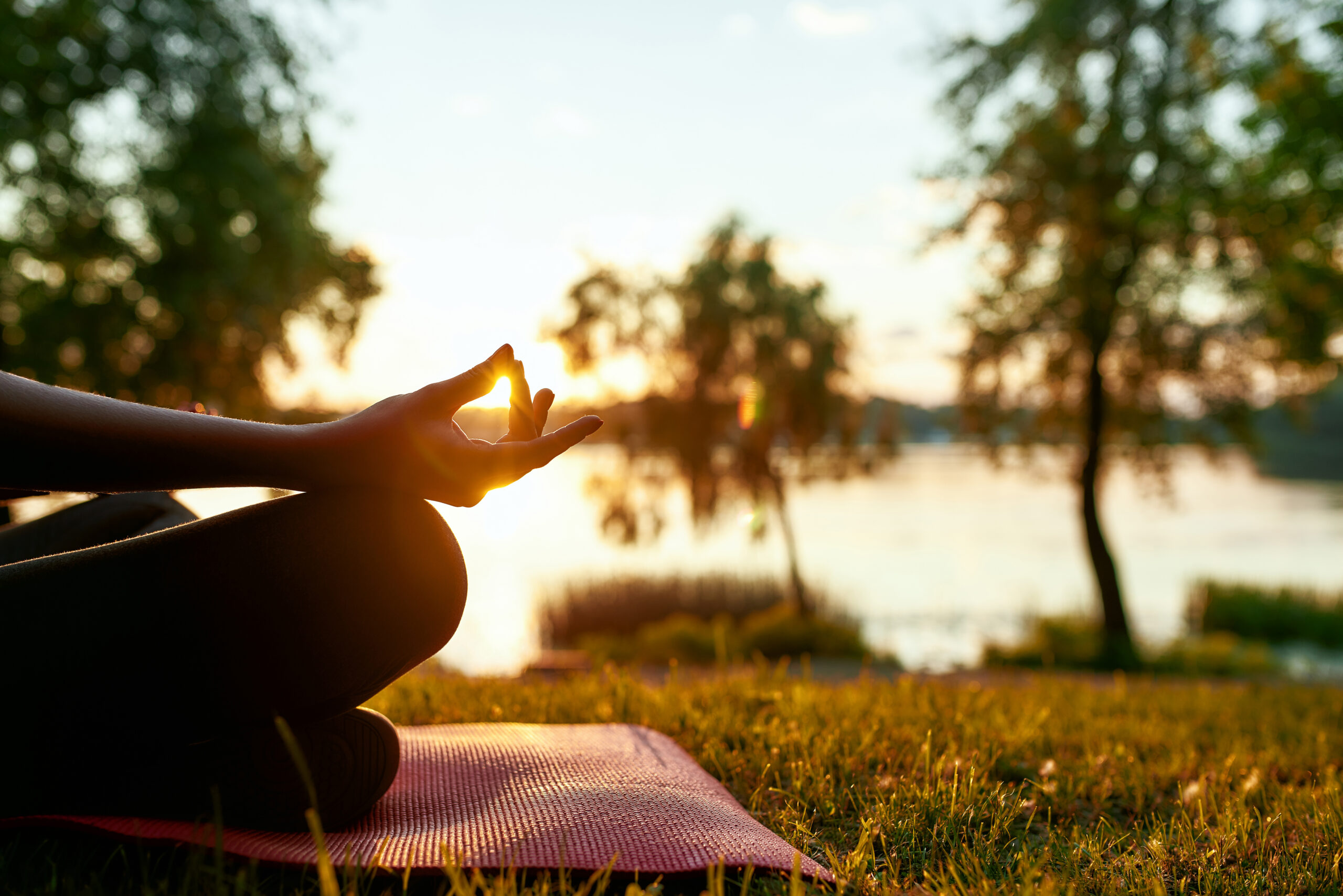


Modern culture often treats yoga as stretching with better branding.
A fitness class.
A mobility tool.
An aesthetic.
A wellness accessory.
But historically, yoga was something very different.
It was a technology for observing consciousness.
Long before yoga studios, expensive mats, and social media poses, ancient practitioners were asking questions that still sit at the center of modern neuroscience and philosophy:
Why do humans suffer?
Why do thoughts control us so easily?
What happens when attention becomes steady enough to observe the mind itself?
And perhaps most importantly:
Who are you beneath constant mental noise?
The physical postures were never meant to be the entire practice.
In fact, in many traditions, they were simply preparation.
A way of regulating the body and nervous system so a person could sit still long enough to notice what was happening internally.
Because once the body settles, something strange begins to happen.
You start noticing how reactive the mind actually is.
How quickly it grasps.
Judges.
Fears.
Performs.
Compares.
Yoga was designed to help reduce that internal fragmentation.
Not through force.
Through awareness.
Breath slows.
Attention stabilizes.
The nervous system becomes less chaotic.
And when that happens, many people begin reporting the same experience across cultures and centuries:
A quieter relationship with thought.
More space between stimulus and reaction.
A growing sense that awareness itself exists beneath the constant movement of the mind.
Modern science now supports many of the physiological effects ancient practitioners were observing:
reduced stress hormones,
improved emotional regulation,
changes in brain activity,
improved vagal tone,
greater parasympathetic activation.
The ancients didn’t have MRI machines.
But they were observant enough to notice that human beings behave differently when their internal state changes.
Less reactive.
Less impulsive.
Less consumed by fear and comparison.
Not perfect.
Just more coherent.
And maybe this is why yoga has survived for thousands of years while so many trends disappear.
Because beneath the poses sits something much deeper than exercise.
An ancient attempt to understand consciousness through direct experience.
Maybe the ancients were never trying to create better bodies.
Maybe they were trying to create enough internal stillness for humans to finally notice themselves clearly.