

The Forgotten Purpose of the Foyer
We rarely notice foyers.
They’re simply there.
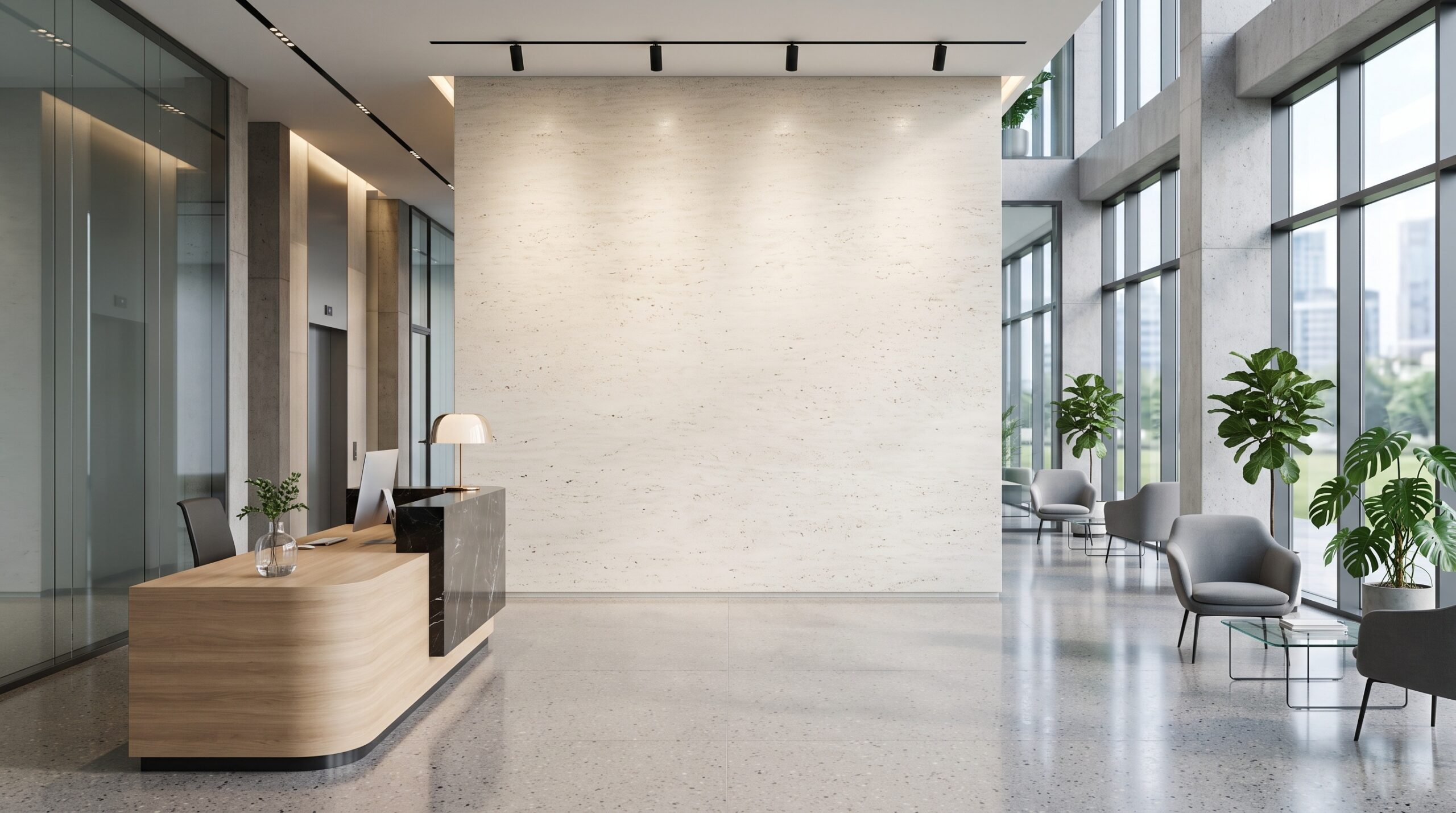
The entrance to a hotel.
The lobby of an office building.
The waiting room before a doctor’s appointment.
The gathering space before a wedding.
The reception area at a yoga studio.
The quiet hall before entering a funeral.
They exist in nearly every building where something meaningful is about to happen.
Walk through one tomorrow.
Watch what people do.
Almost no one rushes through.
Some pause.
Some look around.
Some straighten their clothes.
Some take a deep breath.
Some quietly gather themselves before moving on.
Others notice familiar faces.
A few introduce themselves to strangers.
Conversations begin.
Conversations end.
People arrive.
Not just physically.
Somatically.
The foyer asks almost nothing of us.
It simply gives us permission to arrive before asking us to become.
Now imagine those same buildings without them.
Imagine walking directly from the parking lot into the operating room.
Or stepping from the sidewalk directly onto the stage.
Or opening the front door and finding yourself already standing in the middle of a wedding ceremony.
It wouldn’t feel efficient.
It would feel wrong.
Not because of logistics.
Because something inside us understands that meaningful transitions require more than movement.
They require orientation.
We often think of roads, hallways, sidewalks, elevators, and bridges as the infrastructure of movement.
They move us from one place to another.
A foyer serves a different purpose.
It does not transport us.
It prepares us.
For a brief moment, we exist between where we have been and where we are going.
The interview has not begun.
The diagnosis has not been given.
The ceremony has not yet started.
We can still leave.
We can still stay.
We can still breathe.
We can still choose.
Our agency remains completely intact.
Perhaps that is the quiet genius of a foyer.
It preserves possibility until the very last moment.
Whether we recognize it or not, a foyer is a confluence.
Not simply of people.
Of possibilities.
The life we have been living has not quite ended.
The next chapter has not quite begun.
Our thoughts are catching up with our feet.
Our emotions are catching up with our circumstances.
Our nervous system is catching up with reality.
Someone else entering that same foyer is carrying an entirely different threshold.
A wedding.
A biopsy.
A first day of school.
A retirement celebration.
An adoption.
A memorial service.
For a brief moment, all of those human journeys occupy the same space.
Not because they are the same.
Because they are all in transition.
Perhaps this is why we have engineered foyers into nearly every meaningful physical experience.
Not because architects enjoy designing extra rooms.
Because human beings do not transition instantaneously.
We arrive in stages.
Our bodies know this.
Long before our minds do.
Then, somewhere along the way, I began wondering something.
We have engineered extraordinary ways to move people through space.
We have given far less thought to how we move people through life’s most meaningful transitions.
Modern life has become extraordinarily good at transporting human beings while becoming increasingly indifferent to how human beings transition.
A child spends nearly thirteen thousand days moving toward adulthood.
We carefully engineer classrooms.
Hallways.
Playgrounds.
Athletic fields.
Testing schedules.
Graduation ceremonies.
Yet somewhere along the way, many children quietly begin believing that their value lies not in who they are becoming, but in how they perform.
The transition happens so gradually that few of us notice it while it is unfolding.
One day they are simply no longer playing.
They are competing.
Comparing.
Performing.
Protecting.
They crossed one of the most significant thresholds of their lives.
Where was the foyer?
The pattern doesn’t end there.
A young adult graduates from college and enters the workforce.
A parent brings home their first child.
Someone signs divorce papers after twenty years of marriage.
A physician delivers a diagnosis that quietly divides life into before and after.
A son walks out of the hospital after saying goodbye to his father for the last time.
These are not simply events.
They are thresholds.
They ask us to become someone different than the person who arrived.
And yet, more often than not, we expect ourselves to make these crossings alone.
Perhaps this helps explain why so many people feel exhausted without understanding why.
Life has not simply become faster.
It has become increasingly threshold dense.
More decisions.
More identities.
More information.
More uncertainty.
More moments that quietly ask,
“Who will you become now?”
Our calendars became full.
Our transitions became empty.
When we fail to recognize thresholds, we begin treating every challenge as though it were merely another problem to solve.
We offer advice when presence is needed.
Information when orientation is needed.
Solutions when safety is needed.
We mistake movement for progress because movement is easier to measure.
But human development has never been measured by how quickly someone moves.
It has always been measured by how deeply they become.
Trust grows the same way.
We often speak of trust as though it were something we decide.
It rarely is.
Trust is something our nervous system discovers.
Not because another person has been analyzed into certainty.
But because, somehow, in their presence, our body concludes that it is safe to remain open.
Trust is not a transaction.
Transactions happen after certainty has been negotiated.
Trust appears before certainty ever arrives.
It is what allows us to step toward the threshold in the first place.
Without trust, we hesitate.
Without trust, every doorway feels narrower than it really is.
Without trust, the hallway becomes the destination because crossing no longer feels safe.
Perhaps this is why the most meaningful people in our lives rarely solved our problems.
They did something much quieter.
A great teacher.
A trusted coach.
A patient therapist.
A wise grandparent.
A mentor.
A friend who sat with us without trying to fix us.
Looking back, they all seemed to possess the same remarkable ability.
They knew how to foyer.
They didn’t carry us across the threshold.
They didn’t push us through it.
They didn’t promise us what waited on the other side.
They simply created the conditions that allowed us to take the next step ourselves.
And because we took that step ourselves, it became part of who we were becoming.
I have begun wondering what our world would look like if we treated the engineering of human transition with the same seriousness that we treat the engineering of human transportation.
What if we recognized that every meaningful threshold deserves intentional design?
What if schools were designed not only to educate, but to foyer children into adulthood?
What if healthcare systems were designed not only to treat disease, but to foyer patients through uncertainty?
What if organizations understood that every promotion, every layoff, every retirement, every new employee represented a threshold requiring more than paperwork?
What if communities once again became places where people were gently ushered into belonging rather than expected to find it alone?
I don’t believe we have forgotten how to care for one another.
I think we have forgotten to design for one another.
We have mastered the engineering of efficiency.
Perhaps the next great frontier is the engineering of transition.
Because every meaningful transformation begins the same way.
Not with certainty.
Not with confidence.
But with a threshold.
And every threshold asks the same quiet question:
“Is there a place where I can arrive before I am asked to become?”